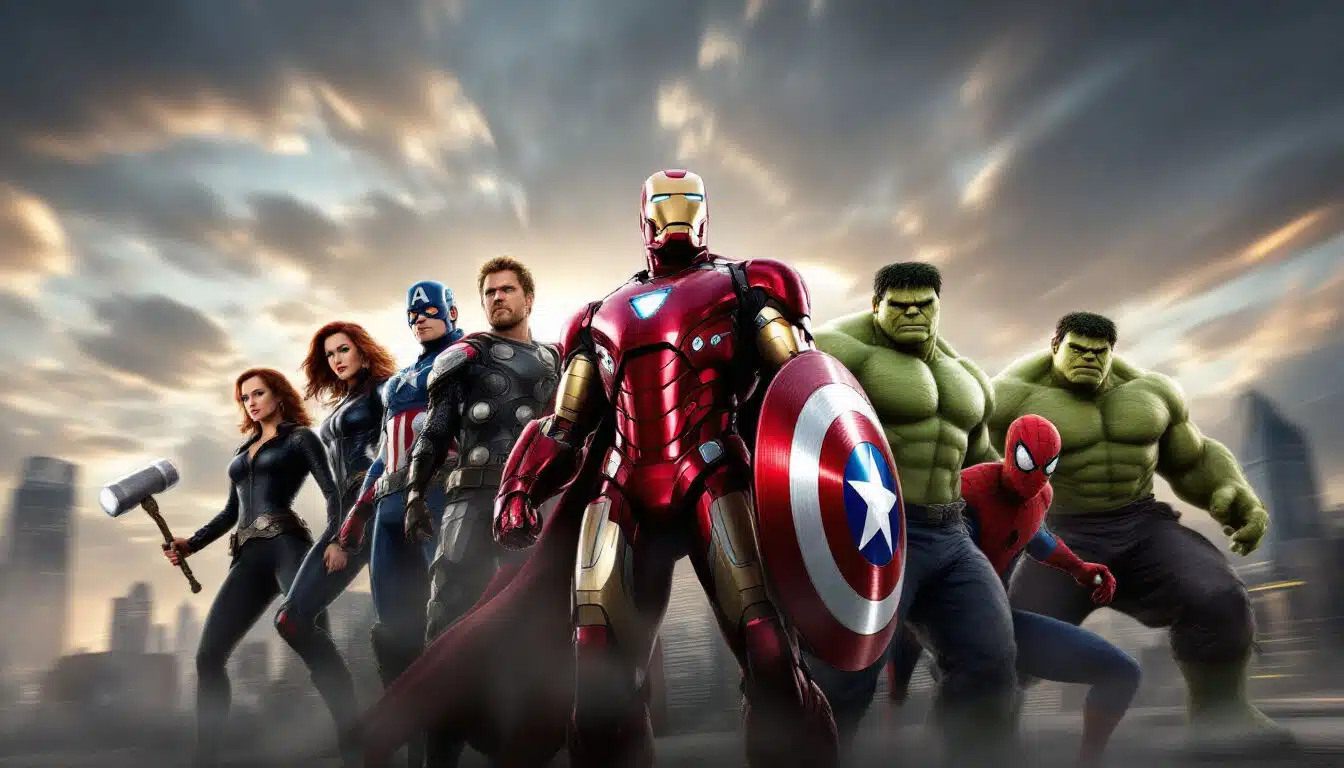
Marvel Comics has transformed from a Depression-era publisher into the most successful multimedia franchise in history. What began with superhero comic books in 1939 has evolved into a global cultural phenomenon spanning films, television, streaming, video games, and merchandise. At the heart of this empire lies one revolutionary concept: the shared universe — where dozens of characters and storylines coexist within a single, interconnected narrative world. Here is everything you need to know about how it was built, who drives it, and where it is headed.
From Timely Comics to Marvel: The Origin Story
Marvel's story begins in 1939 as Timely Publications, quickly renamed Atlas Comics before finally adopting the Marvel name in 1961. The pivotal moment arrived when writer Stan Lee and artist Jack Kirby created the Fantastic Four — Marvel's first modern superhero team — followed swiftly by Spider-Man, the Hulk, Thor, Iron Man, and the X-Men.
Unlike the infallible heroes of competing publishers, Marvel's characters were flawed, relatable, and haunted by personal struggles. Peter Parker juggled superhero duties with teenage social anxiety. Tony Stark battled alcoholism. Bruce Banner feared the monster within. This human dimension resonated deeply with readers and established the template for decades of storytelling — characters who inhabited the same fictional New York City, crossing paths, forming alliances, and sometimes clashing. The shared universe was born on the printed page long before it reached cinema screens.
The MCU: How Kevin Feige Built a Cinematic Empire
The Marvel Cinematic Universe launched in 2008 with Iron Man, starring Robert Downey Jr. as Tony Stark. The film's post-credits scene — Nick Fury appearing to discuss the "Avenger Initiative" — signalled something unprecedented in cinema: a connected franchise spanning multiple films and studios. Under the strategic leadership of Kevin Feige, Marvel Studios executed a meticulous long-form storytelling plan that rivalled television drama in its complexity and ambition.
"We wanted to make films that stood alone but rewarded viewers who saw everything. It was the ultimate serialized storytelling experiment." — Kevin Feige
The MCU is structured into Phases, each building toward a climactic crossover event. The result is a franchise that has grossed over $30 billion at the global box office, making it the highest-earning film franchise in history by a significant margin.
The Infinity Saga (Phases 1–3): Building to Endgame
Phases 1 through 3 form the Infinity Saga — a 23-film arc tracing the rise of Thanos and the Avengers' struggle against him. Phase 1 introduced core heroes: Iron Man, Thor, Captain America, the Hulk, Black Widow, and Hawkeye, assembling them in The Avengers (2012). Phase 2 deepened individual storylines while planting seeds for the larger conflict. Phase 3 delivered the saga's emotional climax.
Avengers: Infinity War (2018) ended with half the universe's population disintegrating. Avengers: Endgame (2019) saw the surviving heroes travel through time to undo the devastation — and became the highest-grossing film of all time upon release. Tony Stark's self-sacrifice to wield the Infinity Stones provided one of modern cinema's most resonant farewells. The arc took eleven years and 22 films to complete, a feat without precedent in the history of storytelling.
The Multiverse Saga (Phases 4–6): A New Era
The MCU's current phase introduces alternate realities and the multiverse — a framework that allows Marvel to integrate previously separate franchises and introduce new iterations of classic characters. Disney's acquisition of 20th Century Fox brought the X-Men and Fantastic Four into Marvel's creative control for the first time, opening vast storytelling possibilities.
Phase 4 and 5 have expanded the MCU through both theatrical releases and Disney+ series, with WandaVision, Loki, Hawkeye, Moon Knight, and Ms. Marvel delivering deep character explorations. The saga's central threat is Kang the Conqueror, a time-travelling tyrant who exists in countless variants across the multiverse. Whether the Multiverse Saga can replicate the emotional cohesion of the Infinity Saga remains the franchise's greatest creative challenge.
Marvel's Most Iconic Heroes
Spider-Man remains the franchise's most beloved character — relatable, witty, and perpetually out of his depth. His three MCU solo films, culminating in No Way Home, brought three generations of Spider-Man films together in a single story that became a cultural event. Captain America embodies moral clarity and sacrifice; Steve Rogers's arc across six films stands as the MCU's most emotionally complete character journey.
Black Panther opened new cultural horizons — T'Challa's story resonated globally, particularly across the African diaspora, and the 2018 film became a landmark moment in superhero cinema. Thor underwent perhaps the most dramatic evolution: from a straightforward warrior to a comedic and emotionally complex figure across four solo films. Wanda Maximoff / Scarlet Witch emerged as the saga's most tragic figure, her grief and power colliding catastrophically in Doctor Strange in the Multiverse of Madness.
Marvel's Greatest Villains
Marvel's villains have evolved from simple antagonists into the franchise's most compelling figures. Thanos, portrayed by Josh Brolin, transcended the trope of the comic-book megalomaniac — his warped utilitarian logic gave the Infinity Saga genuine philosophical weight. Eliminating half of all life to preserve resources was presented not as cackling evil but as a twisted form of mercy, making him uniquely unsettling.
Loki, the God of Mischief, became so popular that he earned his own Disney+ series exploring identity, trauma, and redemption across timelines. Killmonger in Black Panther presented a villain whose cause had genuine moral legitimacy even as his methods were rejected. Marvel's best antagonists don't oppose the heroes — they reflect them.
Are You a Marvel Expert?
5 questions to test your knowledge of the MCU and Marvel Comics
Which film officially launched the Marvel Cinematic Universe in 2008?
How many Infinity Stones exist in the Marvel universe?
What is the name of Thor's legendary hammer?
Which character holds the title of Sorcerer Supreme?
In Avengers: Endgame, who ultimately uses the Infinity Stones to bring everyone back?
Complete MCU Films Timeline
-
2008Iron Man
-
2008The Incredible Hulk
-
2010Iron Man 2
-
2011Thor
-
2011Captain America: The First Avenger
-
2012Marvel's The Avengers
-
2013Iron Man 3
-
2013Thor: The Dark World
-
2014Captain America: The Winter Soldier
-
2014Guardians of the Galaxy
-
2015Avengers: Age of Ultron
-
2015Ant-Man
-
2016Captain America: Civil War
-
2016Doctor Strange
-
2017Guardians of the Galaxy Vol. 2
-
2017Spider-Man: Homecoming
-
2017Thor: Ragnarok
-
2018Black Panther
-
2018Avengers: Infinity War
-
2018Ant-Man and the Wasp
-
2019Captain Marvel
-
2019Avengers: Endgame
-
2019Spider-Man: Far From Home
-
2021 · SérieWandaVision
-
2021 · SérieFalcon et le Soldat de l'Hiver
-
2021 · SérieLoki
-
2021 · FilmBlack Widow
-
2021 · FilmShang-Chi and the Legend of the Ten Rings
-
2021 · FilmEternals
-
2021 · AniméWhat If…?
-
2021 · SérieHawkeye
-
Déc 2021 · FilmSpider-Man: No Way Home
-
Mars 2022 · SérieMoon Knight
-
Mai 2022 · FilmDoctor Strange in the Multiverse of Madness
-
2022 · SérieMs. Marvel
-
Juil 2022 · FilmThor: Love and Thunder
-
Août 2022 · SérieShe-Hulk: Avocate
-
Nov 2022 · FilmBlack Panther: Wakanda Forever
-
Fév 2023 · FilmAnt-Man et la Guêpe : Quantumania
-
Mai 2023 · FilmLes Gardiens de la Galaxie Vol. 3
-
2023 · SérieSecret Invasion
-
Oct 2023 · SérieLoki Saison 2
-
Nov 2023 · FilmThe Marvels
-
Jan 2024 · SérieEcho
-
2024 · SérieIronheart
-
2024 · SérieAgatha : Coven of Chaos
-
2024 · SérieDaredevil : Born Again
-
2024 · FilmCaptain America : New World Order
-
26 Juil 2024 · FilmThunderbolts
-
À venir · FilmBlade
Disney+ and the Streaming Revolution
The Disney+ era marked Marvel's full embrace of long-form storytelling. Series like WandaVision, Loki, Hawkeye, Ms. Marvel, and Moon Knight explore facets of characters that theatrical releases cannot accommodate. These productions are not supplementary content — they are essential chapters in the overarching narrative, carrying direct consequences for subsequent films.
The streaming model has also allowed Marvel to introduce characters with dedicated fanbases but smaller theatrical appeal, deepening the universe without requiring every story to perform at blockbuster scale. Daredevil: Born Again and Ironheart continue this expansion, each bringing distinct visual and tonal identities to the MCU's ever-widening world.
What is the difference between Marvel Comics and the MCU?
Marvel Comics is the original publishing arm, with a history dating to 1939. The MCU (Marvel Cinematic Universe) is Marvel Studios' film and streaming adaptation, launched in 2008. While the MCU draws from comics storylines, it frequently adapts and reimagines them.
What order should I watch the MCU films?
Most fans recommend release order for the first watch to experience the saga as it was built. Chronological order (by in-universe events) is better for rewatches. Either approach works — the films are designed to be individually accessible.
Who is the most powerful character in the MCU?
By raw power levels, the Scarlet Witch (Wanda Maximoff) and Captain Marvel are frequently cited as the strongest heroes, while Thanos with the complete Infinity Gauntlet represents the saga's most formidable antagonist.
What is the Multiverse Saga leading to?
Phases 4 through 6 lead to Avengers: Secret Wars (2027), expected to be the Multiverse Saga's grand finale — an event involving incursions between alternate realities and the potential restructuring of the entire MCU.
Are the Disney+ series essential viewing?
Several series — particularly Loki, WandaVision, Hawkeye, and The Falcon and the Winter Soldier — introduce plot threads that directly continue in films. Watching them enriches the theatrical experience considerably.
